|
Research Team: Organic/Inorganic Hybrid Solar Cells Group
Members: Dr. Javed Khattak, Dr. Hafiz Muhammad Asif Javed
Cost-Effective and Eco-Friendly Organic Solar Cells
for Commercial Application in Pakistan
The potential of renewable energy sources is enormous as they can meet the world's energy demand. Sunlight is a clean, renewable and inexhaustible energy source on the earth. One of the biggest challenges ahead of human kind is to replace the fossil fuel with renewable energy sources while keeping pace with the worldwide increasing thirst for energy because of increasing population and rising demand from developing countries. 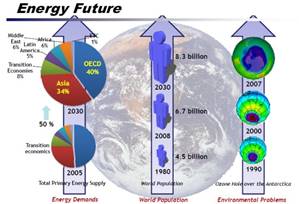
This challenge has to be answered with a low-cost solution using abundantly available raw materials. As the Sun is an obvious source of clean and cheap energy, already used by Nature to sustain almost all life on Earth. Therefore harnessing the power of the Sun with photovoltaic technologies appears to be the only reasonable large scale answer to the energy challenge. Up to now, commercially available photovoltaic technologies are based on inorganic materials, which require high costs and highly energy consuming preparation methods. In addition, several of those materials, like CdTe, are toxic and have low natural abundance. Organic photovoltaic can avoids those problems. However, the efficiencies of organic-based photovoltaic cells are still at the moment a long way behind those obtained with purely inorganic based photovoltaic technologies.
Conventional organic photovoltaic devices use a donor and an acceptor type of organic materials, which form a heterojunction favoring the separation of the exciton into two carriers. Those formed carriers are then transported to the electrodes by the same organic materials that are used for the generation of an exciton. That is a material for classical organic photovoltaic devices should have both good light harvesting properties and good carriers transporting properties which is a difficult task to achieve. On the other hand, the dye-sensitized solar cell (DSSC) technology separates the two requirements as the charge generation is done at the semiconductor-dye interface and the charge transport is done by the semiconductor and the electrolyte. That is spectral properties optimization can be done by modifying the dye alone, while carriers transport properties can be improved by optimizing the semiconductor, nanostructure, dye and the electrolyte composition.
In photovoltaics, our research interests include the generation of photoactive nano thin films and their application in dye-sensitized solar cells, design and synthesis of photovoltaic (PV) materials, design of photovoltaic materials with experimental and computational approach.
Furthermore, our research interests include organic-inorganic hybrid materials for solar cells applications, TiO2 nanotubes/nanowires arrays, ZnO nanowires arrays and SnO2 nanotube arrays sensitized with semiconductor quantum dots or organic dyes for photovoltaic and environmental applications.
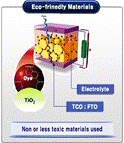 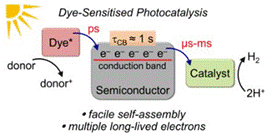 In addition, the hydrogen gas (H2) can be produced directly from abundantly available metal catalysts and solar light through photo-electrochemical water splitting. Our goal is to create a distinctive venue focused on solar hydrogen production through fabrication of novel nano-structured photo-electrodes. We are also working on electrochemical and photochemical catalysts. Study of interfacing the light-harvesting systems with the electron/hole conducting materials and the catalysts is in the domain of our research group. In addition, the hydrogen gas (H2) can be produced directly from abundantly available metal catalysts and solar light through photo-electrochemical water splitting. Our goal is to create a distinctive venue focused on solar hydrogen production through fabrication of novel nano-structured photo-electrodes. We are also working on electrochemical and photochemical catalysts. Study of interfacing the light-harvesting systems with the electron/hole conducting materials and the catalysts is in the domain of our research group.
Research Description:
There are four types of conversion technologies currently available, each appropriate for specific biomass types and resulting in specific energy products:
1. Thermal conversion is the use of heat, with or without the presence of oxygen, to convert biomass materials or feedstock into other forms of energy. Thermal conversion technologies include direct combustion, pyrolysis and torrefaction.
2. Thermochemical conversion is the application of heat and chemical processes in the production of energy products from biomass. A key thermochemical conversion process is gasification.
3. Biochemical conversion involves use of enzymes, bacteria or other microorganisms to break down biomass into liquid fuels, and includes anaerobic digestion, and fermentation.
4. Chemical conversion involves use of chemical agents to convert biomass into liquid fuels.
Research Team: Thermochemical Conversion
Name of the Members: Engr. Hassan Haroon, Engr. Tayyab, Engr. Umaid Khan
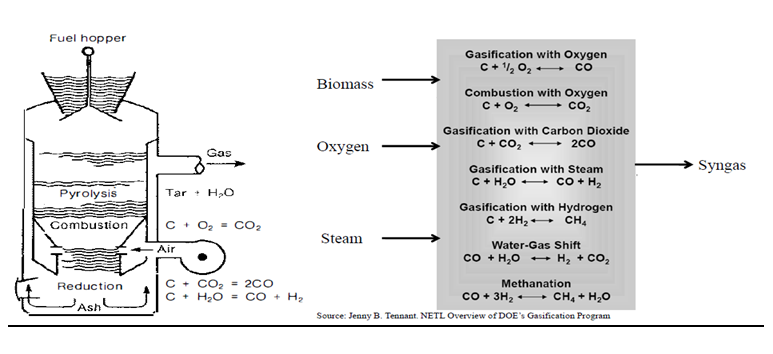
Thermochemical conversion is the application of heat and chemical processes in the production of energy products from biomass. A key thermochemical conversion process is gasification. Partial oxidation of biomass to produce a low calorific-value fuel called syngas or producer gas. Main components of the producer gas are CO, H2, CO2, CH4, N2, and H2O. Chemical transformation can take place in fixed, moving, or fluidized bed or entrained flow gasifiers at temperatures of 1400 to 1800°F with pressures from 1 to 30 atmospheres.
Currently thermochemical conversion group is working on gasification process modelling to optimize the process and assess the effect of different parameters on gas yield. Recently a team of engineers went to China for training on downdraft gasifier. A 100 KW gasifier plant will be installed in the Institute's premises & the group will work on the production of syngas which will then be fed into engine & generator for power generation purposes.
|
Research Team: Biological Conversion
Name of the Members: Dr Saima Mirza, Dr Athar Mahmood & Muhammad Azam Khan
Microbiology Laboratory in PBI carrying out research projects in a number of areas of advanced biofuel production including microbial strain improvement by gene manipulation, metabolic engineering for developing novel strain and molecular techniques. Moreover, enzyme engineering for improved lignocellulosic waste pretreatment is also main focus of our laboratory in PBI. Briefly focused research activities are as under:
Biological Hydrogen Production: Photofermentation, dark fermentation, integrated photo-dark fermentation, by using readily available waste streams and crop residue which can solve one of the major environmental issue of solid waste dumping and bioremediation.
Algal Biofuels/ Jet fuel: We are working on molecular biology, physiology of Algal and cyanobacteria isolates and genetics and metabolic engineering for yield improvement with prime focus on algal biohydrogen and jet fuel. Additional focus is bioremediation of waste with cost reduction by minimizing nutrient consumption.
Microbial Fuel Cell (MFCs): Microbial fuel cells based on biohydrogen generated by genetically engineered microbes. Biohydrogen yield improvement directly affects electricity generation by microbial fuel cell.
Synthetic Design of Microorganisms for Lignin Fuel:
Catalytic production of Aviation fuel hydrocarbons from lignocellulosic Biomass-Derived Lignin. Upgrading Lignin to Aromatic Hydrocarbons by designing synthetic circuit of microbes.
In animal biowaste, methane fermentation is a versatile microbial process capable of converting almost all types of polymeric materials to methane and carbon dioxide under anaerobic conditions. These microbes include bacteria i.e. Trichoderma racei, zymomnas molitis. Clostridium spp, E. coli as well as protozoa and fungi that make consortium to mainly obtain biogas from rumen. For biogas production from cellulosic biomass, anaerobic laboratory is involved in isolation and characterization of cellulolytic microflora from buffalo rumen microflora. In the proposed project, this research group will be involved in isolation and characterization of methanogenic microbes from farm-yard manures, poultry and kitchen waste using conventional and molecular techniques based on PCR and 16S rRNA sequencing. In this perspective, the Institute will develop a consortium of different methanogens for rapid and accelerated methane production.
Among the renewable energy source, ethanol is the most important compounds. Beside starch, lignocellulosic (LC) biomass is another important source of ethanol production from different microbial strains like Saccharomyces cerevisiae, Candida shehatae, Zymomonas mobilis, Pichia stiplis, Kluveromyces marxianus, Thermophilic bacteria: Thermoanaerobacterium saccharolyticum, Thermoanaerobacter ethanolicus, Clostridium thermocellum. The enzyme cellulase has pivotal role in industrial microbiology due to the possibility of using this enzyme complex for conversion of abundantly available renewable LC biomass for production of carbohydrates for numerous industrial applications including bioethanol. The Institute of Microbiology will focus on identification and molecular characterization of novel ingenious microbial strains from different LC based biomass for production of bioethanol. Identification of novel ligninolytic microorganism from LC enrich agricultural waste will be done using API kits and 16S rRNA sequencing. Microbial strains improvement through genetic engineering for enhanced ethanol production and metabolic engineering of enzymatic pathway for lignocellulosic material hydrolysis will be focused.
|
Research Team: Biochemical Conversion Group
Name of the Members: Dr Sana Sadaf, Dr Athar Mahmood, Muhammad Azam Khan, Habib ur Rehman
The Department of Agronomy is actively involved in research and extension services for crop raising and enhancing the crop yields. Special emphasis is laid on producing non-traditional crops for producing biologically viable and adaptable biofuel products. The major role of Department of Agronomy in the
Bio-energy project will be to select the model agronomic crops for biomass production with low inputs for biofuel production.
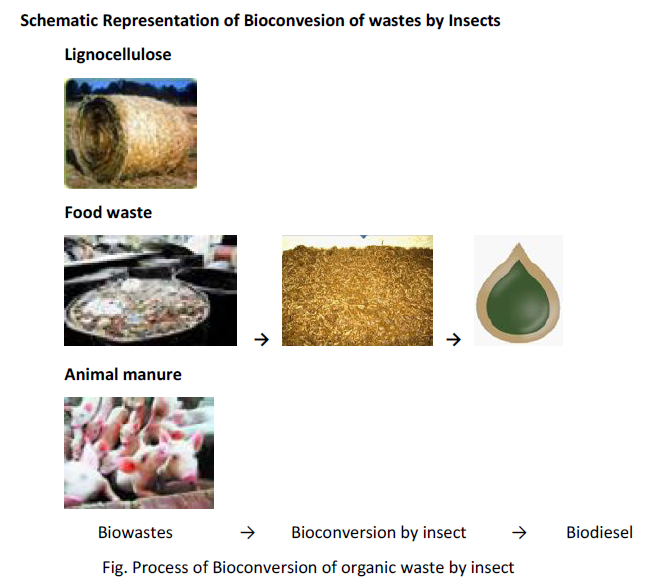
The entomologists are actively engaged in rearing of insects for research. Insects offer great potential for application at both a nutritional and a commercial level and the biodiesel production from insects has been described by several authors. Recently insects have great potential for biofuel production (Biodiesel, bioethanol etc). According to the FAO, each 100-g measure of dried caterpillars contains about 53 g of proteins, 15% fats and about 17% carbohydrates. Their energy value is around 430 kcal per 100 g. It has been found that the Hermetia illucens larvae, Chrysomaya megacephala larve have been found to have a great potential of biofuel production of international standard with good fat contents containing 34.8 and 26.77% fat respectively on average (dried insects). Hermetia illucens L., which is usually known as black soldier fly (BSF), can convert organic wastes into useful products with no competing with food. Insect breeding takes place in warehouses, so there is no need of large land areas such as in the case of energy crops, or water areas, as in the case of microalgae, especially when compared to crops such as soybeans.
The fat content of insects is studied for its utilization in the production of biodiesel. An appropriate selection of species could be used as a source for biodiesel production, applying part of the current extensive knowledge concerning the artificial mass-rearing of insects. The main points to take into consideration regarding this type of rearing are as follows:
- Selection of strains or specific varieties adapted to artificial mass rearing.
- Independent maintenance of egg-producing colonies assigned to the mass rearing of larvae.
- Development of machinery and devices related to larvae/pupae harvesting.
- Control systems for temperature and environmental humidity, ambient light quality and photoperiod.
- A good research laboratory will be established for mass rearing of insects for directly and indirectly biofuel production
- By using genetic engineering and molecular biology techniques, insect celluloses enzymes/Genes will be identified for biofuel (Biodiesel, bioethanol) production
- Research, Counseling, Training and Testing for biomass production for farmers' domestic use and industry use
The production of bio-ethanol and biodiesel will provide benefits for the farmers in terms of alternate energy resources. The third generation bio-fuel produced from algae biomass is gaining more and more attraction worldwide. Algae are being reported to be the most profitable bio-fuel source than 1st or 2nd generation bio-fuel source from algae contains more lipid content (30-78%) and faster growth rate, require fewer nutrients than crop plant and does not compete with food crops for fertile land. The huge quantity of algal biomass produced could be used as a source for biodiesel production. Additionally, after the oil extraction from algae for biodiesel production, the remaining dried mass could also be subjected to fermentation for bio-ethanol production. Scientists are currently involved in multidimensional activities including production and quality assessment of bioethanol and biodiesel as potential energy source. Moreover, feedstock residues and biofuels byproducts (oil seed residue) are being evaluated for their potential pharmaceutical and nutraceutical applications.
|
|