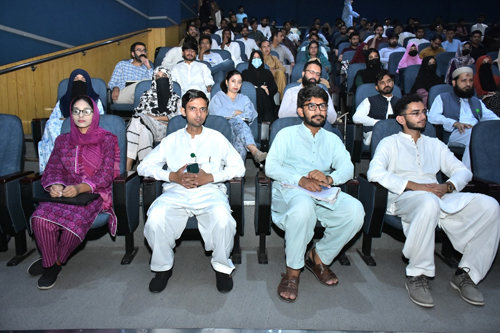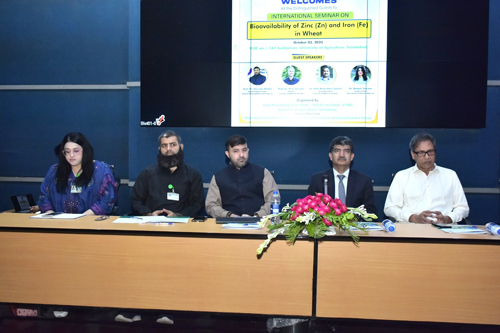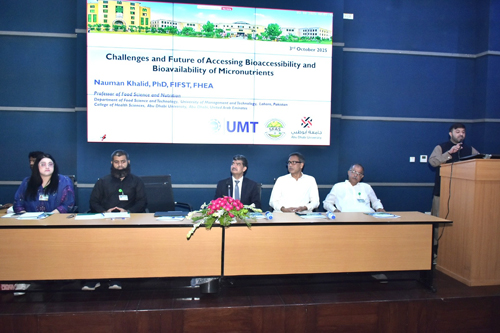

International Seminar on “Bioavailability of Zn and Fe in Wheat.”
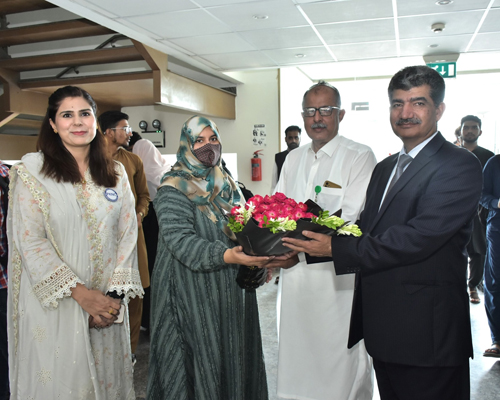
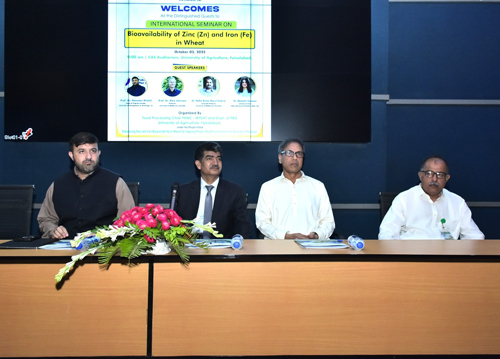
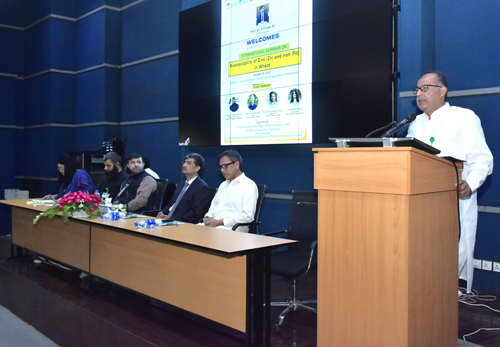
FAISALABAD October 3: The University of Agriculture Faisalabad (UAF), in collaboration with the International Maize and Wheat Improvement Centre (CIMMYT), Mexico, is developing climate-resilient, biofortified wheat lines enriched with zinc (Zn) and iron (Fe) to tackle the widespread issue of micronutrient deficiency that particularly affects women and children in rural areas. To highlight progress and challenges in this field, the Department of Plant Breeding and Genetics (PBG), and the Food Processing Chair of the Pak-Korea Nutrition Center (PKNC), organized an International Seminar on “Bioavailability of Zn and Fe in Wheat.” Chairing the inaugural session, Prof. Dr. Ghulam Murtaza, Dean Faculty of Agriculture, underscored that biofortification offers an effective agricultural solution to increase the concentration of Zn and Fe in wheat grains. He explained that genetic biofortification provides a sustainable and cost-effective strategy, while agronomic biofortification, such as Zn fertilization, can further enhance nutrient content. He noted, however, that improving the bioavailability of these nutrients in wheat is just as critical as increasing their concentration. Highlighting other wheat-related initiatives, he said that UAF Vice Chancellor, Prof. Dr. Zulfiqar Ali, has recently developed “Chenab Pasta-24,” a new drought- and heat-tolerant durum wheat variety. He added that in collaboration with Washington State University, UAF has also developed wheat lines with enhanced resilience to climate change. Dean Faculty of Food Sciences, Prof. Dr. Imran Pasha emphasized that although the bioavailability of Fe and Zn in wheat is generally limited, it can be improved through the development of enhanced crop varieties. He pointed out that micronutrient deficiencies are alarmingly high in Pakistan, citing the National Nutrition Survey 2018 which revealed that 49.1 percent of children under five and 34 percent of women of reproductive age are iron deficient, while 18.6 percent of children under five and 22.1 percent of women suffer from zinc deficiency. Moreover, anemia remains a major public health concern, affecting 53.7 percent of children under five and 44.3 percent of women. She stressed that iron deficiency, the most common among children, leads to impaired cognitive development, poor immunity, and overall reduced health outcomes. He stressed upon the policy intervention for food fortification. Prof. Dr. Azeem Iqbal, Chairman Department of Plant Breeding and Genetics, remarked that in the face of increasing climate change and malnutrition challenges, such initiatives will play a pivotal role in ensuring a better tomorrow. He said that the agriculture sector, being the backbone of Pakistan’s economy, must be aligned with modern practices to boost crop yields and farmers’ income while also improving the nutritional quality of staple foods. Prof. Dr. Nouman Khalid, Dean Department of Food Science and Technology and Programme Founder at the University of Management and Technology, Lahore, discussed the challenges and future prospects of assessing bioaccessibility and bioavailability of micronutrients in wheat and other food products. The seminar also featured contributions from leading national and international experts including Prof. Dr. Alex Johnson, Dr. Hafiz Ansar Rasul Suleria, Prof. Dr. Atif Randhawa, Dr. Benash Sarwar, Dr. Raheela Rehman, and Prof. Dr. Muhammad Kashif Khan, who shared their insights on strategies to improve Zn and Fe concentration in wheat, describing it as vital for community wellbeing