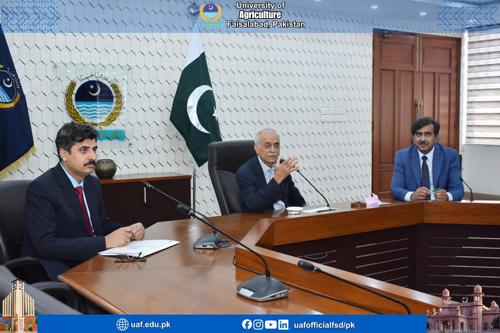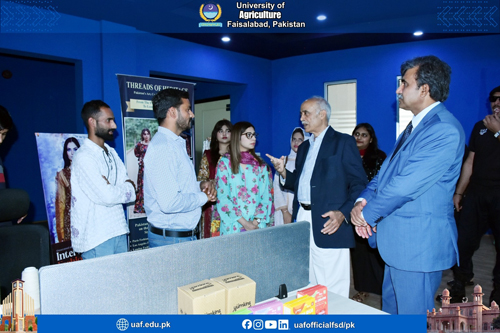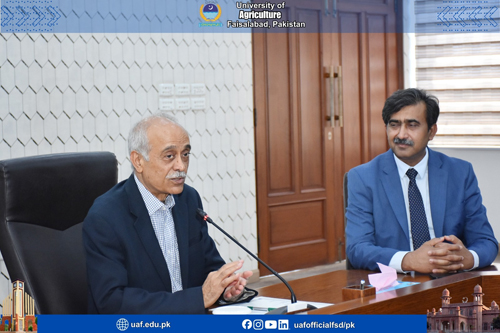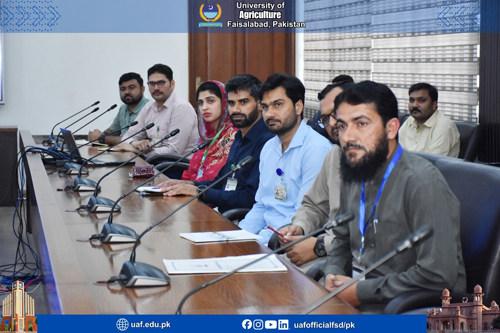

It is a matter of grave concerns that the country wastes 20 to 40 percent of agricultural produce that can be converted into value addition by adopting latest technologies like dehydrators and others to meet the demands and earn forex.
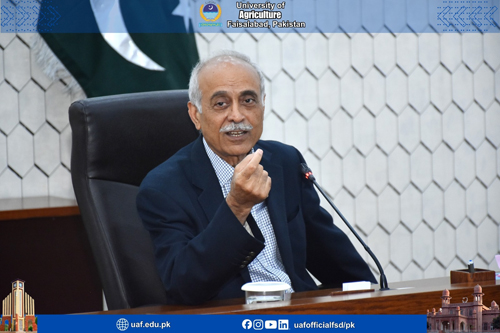
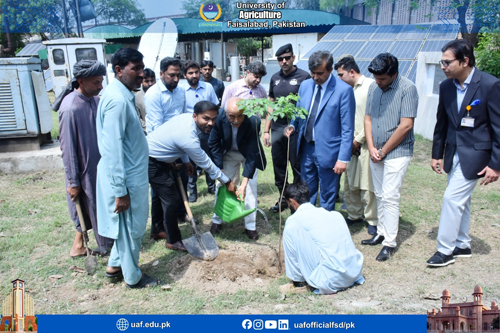
FAISALABAD April 6: It is a matter of grave concerns that the country wastes 20 to 40 percent of agricultural produce that can be converted into value addition by adopting latest technologies like dehydrators and others to meet the demands and earn forex. It was stated by Punjab Higher Education Commission Chairperson Prof Dr Iqrar Ahmad Khan during a visit to University of Agriculture Faisalabad’s centers including Pak-Korea Nutrition Center, Center for Advanced Studies, National Incubation Center, Solar Park, and called on UAF Vice Chancellor Prof Dr Zulfiqar Ali. He also met UAF students who have visited Chinese Universities for higher studies Prof Dr Iqrar Ahmad Khan highlighted the urgent need to minimize crop losses in Pakistan’s agriculture sector. He pointed out that a significant quantity of vegetables and fruits i.e potato, tomatoes, peas, mango, onion, strawberry, banana, jujube, and citrus fruits go to waste every year due to their perishable nature. He said that adopting modern preservation techniques, particularly dehydration technology, can play a vital role in enhancing value addition, extending shelf life and creating new market opportunities for farmers and entrepreneurs. During to of Pak-Korea Nutrition Center, he said that 40 percent of the population was facing malnutrition. He lauded the PKNC to contribute by training around 10,000 lady health workers and an equal number of schoolteachers. He urged them to focus on developing ten innovative and nutritious food products aimed at addressing malnutrition, especially among women and children. He underscored the importance of strengthening the domestic supply chain of agricultural goods to reduce wastage. He said that Pakistan currently has 48 institutions offering degrees in agricultural education and 16 institutions in veterinary sciences. He emphasized that they were revamping the agricultural education system to align it with modern challenges. He urged the students to come up with innovative ideas and business plans to address the current challenges including malnutrition, water issues, food security and others. Only knowledge-based economies are excelling across the globe, he added. Prof Dr Zulfiqar Ali urged the scientists to develop product enriched with nutrition to effectively tackle the challenge of malnutrition in the country. He emphasized that academia must play a proactive role in developing affordable, nutritious, and locally adaptable food products to ensure food security and improved public health. He added that by utilizing indigenous resources and modern technologies, we can contribute significantly to reducing nutritional deficiencies. He said that agricultural sector is currently facing multiple challenges including climate change, water scarcity, declining soil fertility, and increasing cost of inputs, which are affecting productivity and farmers’ livelihoods. He stressed that addressing these challenges requires a comprehensive and science-driven approach, focusing on climate-smart agriculture, efficient water management, and the development of high-yielding and stress-tolerant crop varieties.