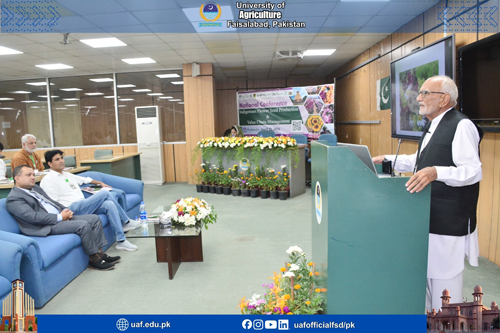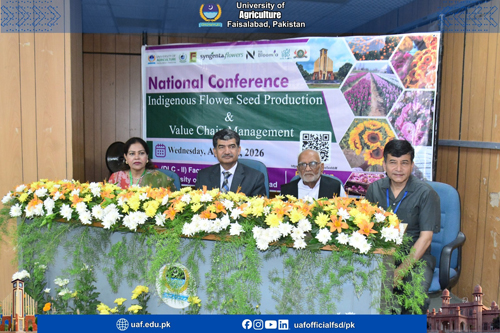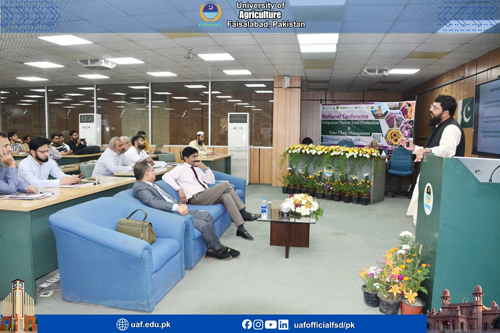

National Conference on “Indigenous Flower Seed Production & Value Chain Management”.
FAISALABAD April 25: Floriculture experts at University of Agriculture Faisalabad have said that the country holds significant potential in the floriculture sector owing to its diverse agro-climatic conditions, fertile soils, and growing domestic and export markets, whereas indigenous flower seed production can play a transformative role in reducing dependency on imports and enhancing farmers’ income. They addressed National Conference on “Indigenous Flower Seed Production & Value Chain Management,” arranged by The Institute of Horticulture Sciences, University of Agriculture Faisalabad (UAF), bringing together leading experts, researchers, policymakers, and stakeholders from across the country to deliberate on enhancing the potential of floriculture sector. Dean, Faculty of Agriculture, Dr. Ghulam Murtaza stressed the need to reduce reliance on imported seeds by promoting local seed production systems. “Strengthening indigenous seed development will not only ensure quality but also significantly reduce production costs and enhance farmers’ profitability,” he said. He further underscored the role of academia in providing innovative solutions and skilled human resource for the sector. Director Horticulture, Dr Ahmad Sattar said that developing a value chain—from seed production to market access—is essential for achieving sustainable growth. “Public-private partnerships and farmer training programs are key to ensuring quality production and improved market linkages,” he added. Dr. Muhammad Aslam, a prominent horticulture expert discussed modern propagation techniques, seed quality standards, and post-harvest handling practices. He emphasized that capacity building of farmers and adoption of scientific methods are crucial to achieving higher yields and better-quality seeds. Dr. Iftikhar Ahmad said “A well-structured value chain can transform the floriculture industry into a significant contributor to the national economy,”. He said that the sector continues to face multiple challenges, including limited availability of quality local seeds, lack of modern production and post-harvest technologies, and others. Addressing these constraints through research-driven innovation, capacity building, and policy support is essential to fully harness the opportunities in floriculture.