
policy dialogue on “Research for Food”
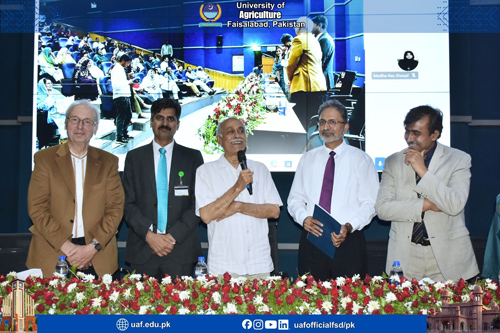
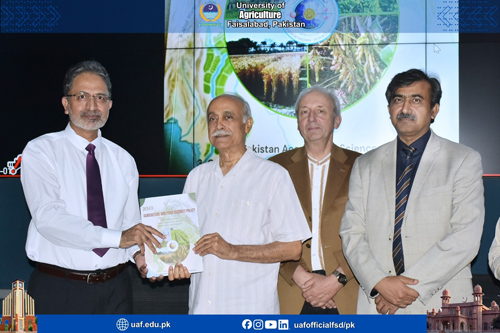
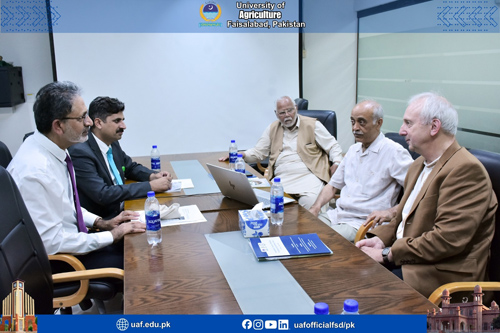
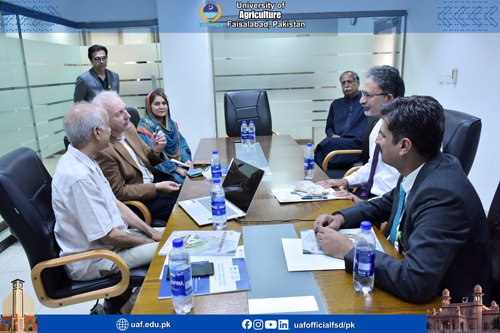
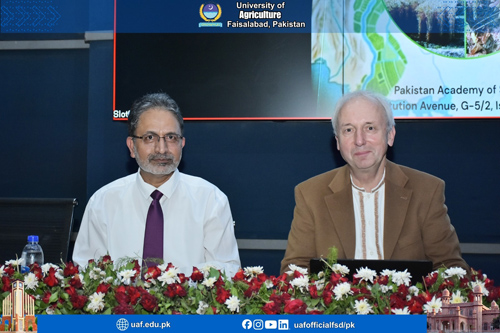
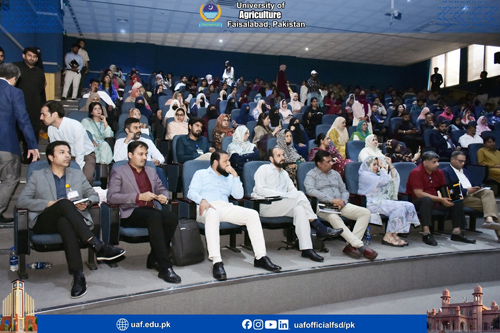
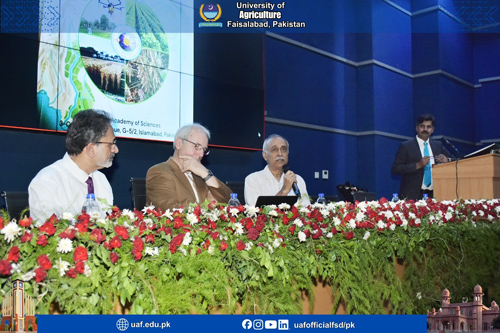
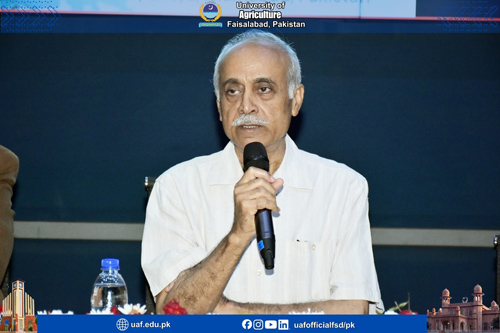
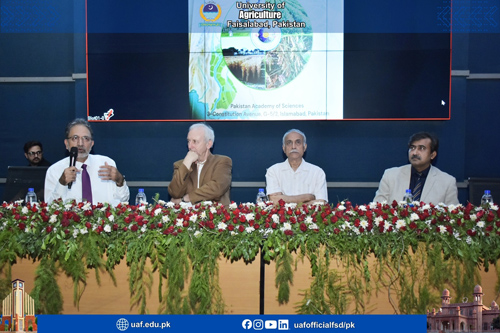
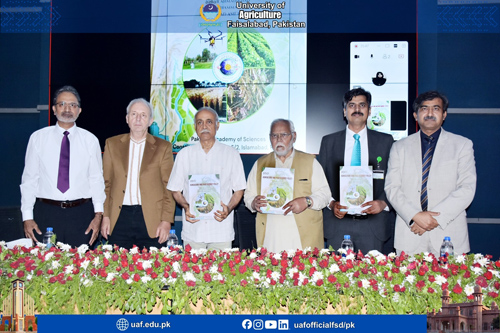
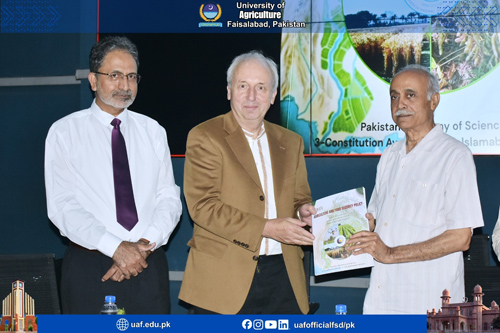
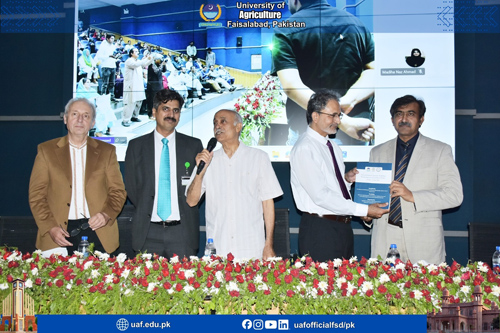
FAISALABAD, May 15: Experts, policymakers, and researchers at a policy dialogue on “Research for Food” called for strengthening agricultural research systems, improve institutional coordination, and ensure policy consistency to address Pakistan’s growing food security challenges amid projections that the country’s population may approach 390 million by 2050. The policy dialogue was organized at the Centre for Advanced Studies (CAS), University of Agriculture Faisalabad under the Punjab Higher Education Commission (PHEC) research cluster. The event was jointly organized by the Agri. Policy, Law and Governance Center-UAF, Punjab Higher Education Commission (PHEC), University of Management and Technology, Muhammad Nawaz Shareef University of Agriculture, and the BNU Center for Policy Research, Beaconhouse National University. During the event, a book titled Debate: Agriculture and Food Security Policy, authored by Prof. Dr. Iqrar Ahmad Khan along with co-authors Prof. Dr. Faqir Muhammad Anjum and Prof. Dr. M. Asif Kamran, was also launched. The book was published by the Pakistan Academy of Sciences and focused on key issues related to agriculture, food security, and policy reforms in Pakistan. Addressing the participants, Chairman Punjab Higher Education Commission Prof. Dr. Iqrar Ahmad Khan pointed out that Pakistan’s food insecurity was largely “a case of neglect” and called for tangible research-driven policies to tackle emerging challenges in agriculture and food systems. He said agricultural productivity per acre was declining due to traditional farming methods, deteriorating soil health, climate change, limited access to modern machinery, and weak policy implementation. He stressed that policy consistency was essential for sustainable agricultural growth. He underlined the importance of integrating fragmented agricultural research institutions and improving coordination among universities, policymakers, and research organizations. He also stressed the need to revive the historic “Lyallpur Model,” which linked agricultural research, education, and field-level extension services to ensure that scientific innovations directly benefited farmers and agricultural productivity. Vice Chancellor University of Agriculture Faisalabad Prof. Dr. Zulfiqar Ali said food security had emerged as one of the most serious global challenges due to climate change, water scarcity, and rapid population growth. He said research institutions had a pivotal role in developing climate-smart technologies, improved crop varieties, and sustainable farming systems to ensure food availability for future generations. He said UAF had done significant work on the production side of agriculture and was working on the concept of “gene to fork.” He added that while considerable progress had been made in agricultural production, it was equally important to strengthen value addition, marketing, processing, and other post-production areas. He emphasized that focusing on these dimensions was essential for increasing farmers’ incomes, reducing post-harvest losses, improving market access, and ensuring sustainable agricultural development. Director Agri. Policy, Law and Governance Center-UAF Prof. Dr. M. Asif Kamran said the dialogue aimed to provide a platform for researchers, academicians, and policymakers to exchange ideas and formulate recommendations for sustainable food systems and evidence-based policymaking. He stressed the need for proper utilization of allocated research and development funds, improved institutional integration, and reducing fragmentation within agricultural research systems. He also emphasized greater private sector involvement in research and development and called for stronger intellectual property rights to encourage innovation and investment in agriculture. Dr. Muhammad Ejaz Qureshi from the Australian National University shared his views on global food systems, agricultural economics, and policy interventions needed to strengthen food governance and rural livelihoods. He referred to the Australian agricultural research system and its relevant institutions, including ABARES, CSIRO, and ACIAR, as examples of structured and impact-oriented research approaches. Prof. Dr. Andreas Bürkert from the University of Kassel emphasized the importance of international collaboration in agricultural research and knowledge sharing. Appreciating Pakistan’s scientific potential and problem-solving capacity, he advised institutions to focus not only on solving problems but also on preventing them through better planning, management, and long-term policy approaches.