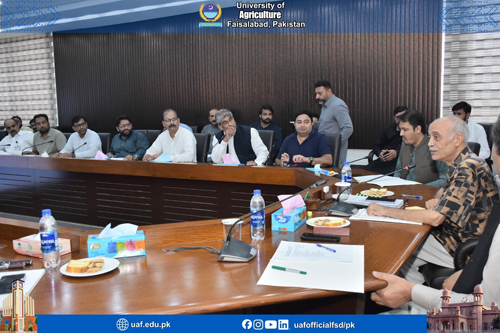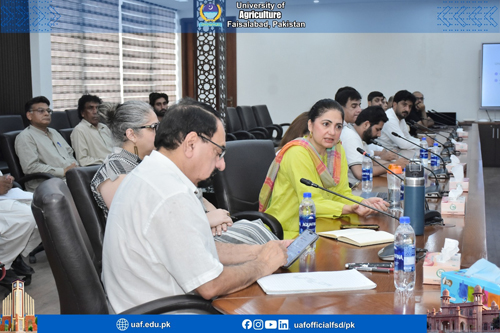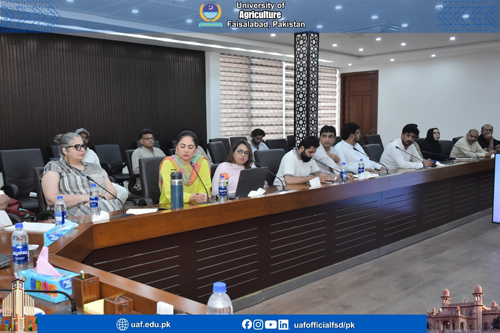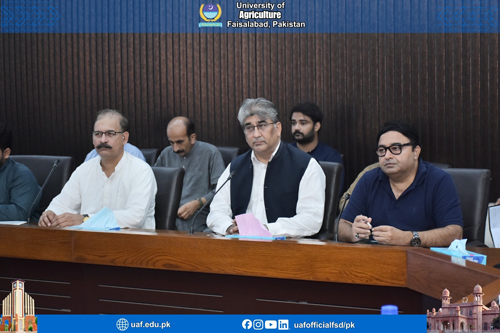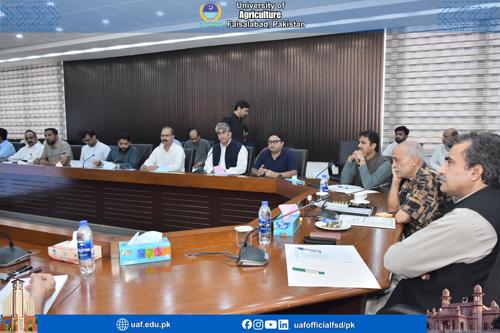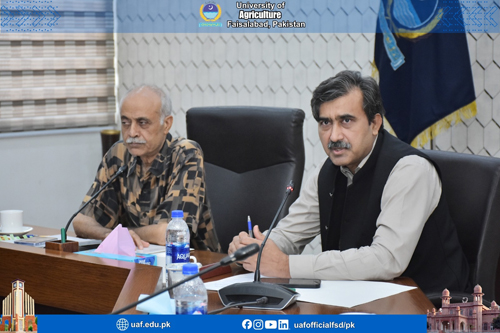

3rd Joint Technical Meeting of Pakistan’s first Food and Agriculture Museum.
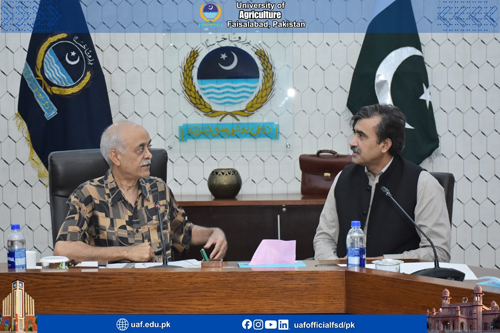
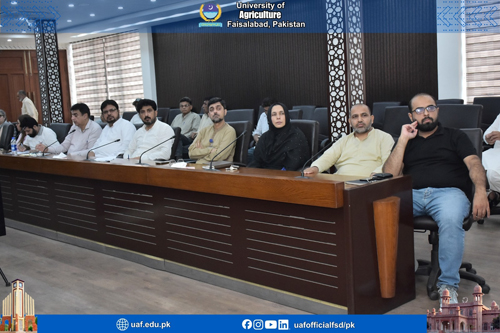
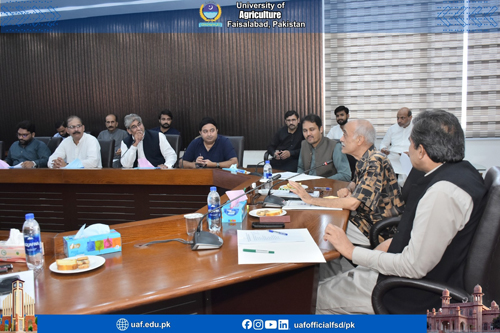
FAISALABAD Aug 2: Reconnecting people with their cultural and agricultural heritage has become increasingly important in the face of rapid global change and modernization, which are gradually eroding historical memory, said Chairperson of the Punjab Higher Education Commission (PHEC) Prof. Dr. Iqrar Ahmad Khan. He chaired a 3rd Joint Technical Meeting of Pakistan’s first Food and Agriculture Museum being established at the University of Agriculture Faisalabad that will serve as a vital milestone in bridging historical agrarian legacy with future innovation. UAF Vice Chancellor Prof Dr Zulfiqar Ali shared the welcome remarks. Dr Iqrar Ahmad Khan said that museums are centers of learning, innovation and public awareness, preserving not only artefacts but also the scientific, cultural and social evolution of farming communities. He recalled that the Punjab Agricultural College & Research Institute in Lyallpur (now UAF) was established following recommendations of the colonial Famine Commission to modernize subcontinent agriculture. He shared that the project is expected to receive phased funding of Rs. 300 million through the Punjab Higher Education Commission under the ADP for the establishment of its galleries. UAF Vice Chancellor Prof. Dr. Zulfiqar Ali stated that preserving agricultural heritage is essential and passing down farming wisdom to upcoming generations. "This will be the first agriculture museum of its kind in Pakistan, spanning an indoor display area of 55,000 square feet. He remarked. "Visitors will be able to explore indoor galleries and a dedicated Hall of Fame, covering everything from indigenous seed varieties and traditional wooden ploughs to advanced greenhouse models, genomic breeding, and digital precision farming technologies." Architectural consultant Pervez Qureshi said agriculture Museum should present architecture as an integral part of agricultural heritage, as buildings and landscapes reflect the evolution of knowledge, culture and society. Museum Consultant Sadia Zainab said the museum will create immersive and interactive learning experiences alongside historical exhibits. The museum will feature specialized educational facilities, including a Herbarium, a Flora and Fauna Gallery, and digital exhibits supported by virtual reality (VR), audio guides, interactive touchscreens, and dynamic projection systems. Dr Muhammad Rafay Muzammil, who is focal person of museum project, said the initiative aimed at systematically preserving Pakistan's agricultural memory before priceless historical material disappeared forever. He said the museum would narrate the complete story of Pakistan's agricultural evolution — from hand-crafted wooden ploughs and indigenous farming systems to mechanised agriculture, biotechnology and digital precision farming. Director Planning and Development Irfan Abbas, Dean Agricultural Engineering Dr. Anjum Munir, Co-Principal Officer Pak Kora Nutrtion Center Prof. Dr. Atif Randhawa, Director External Linkages Dr. Tehseen Azhar, Abdul Mannan, Dr. Waseem Amjad, Dr. Umar, Dr. Sidra, and Dr. Muhammad Shahzad also attended.