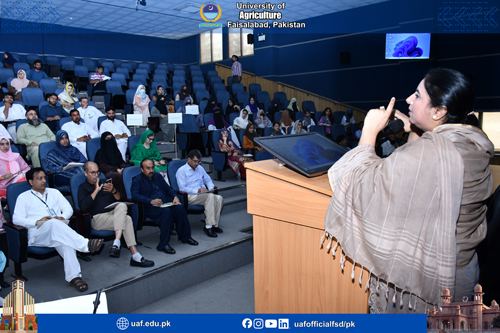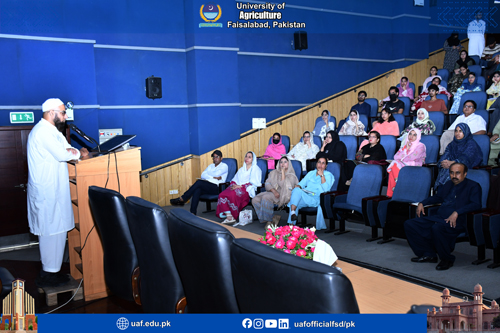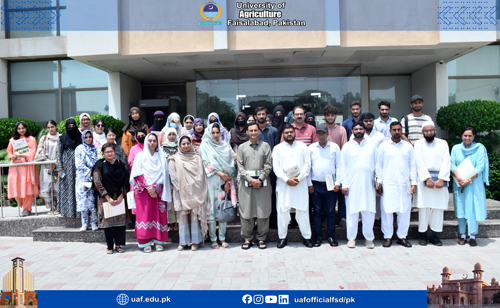

Experts at the University of Agriculture Faisalabad (UAF) have called for establishing a national early warning system for wheat rust.
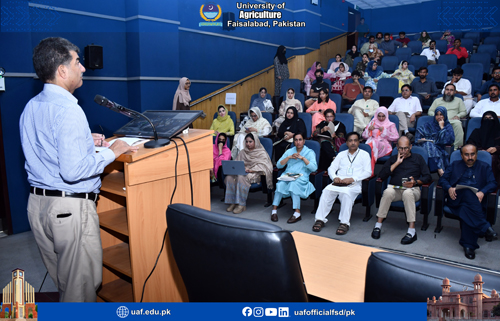
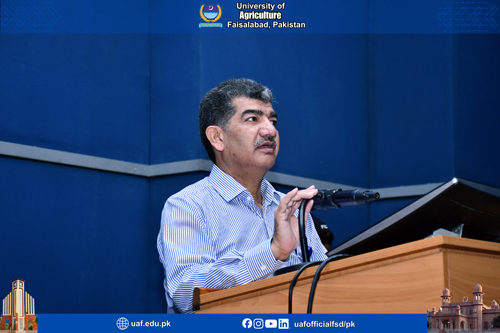
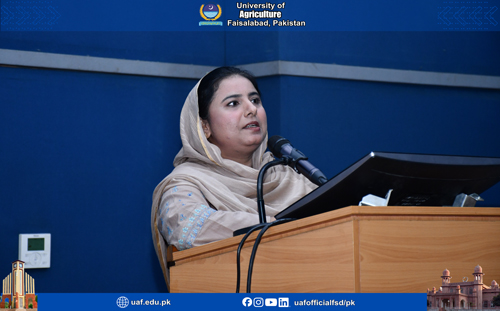
FAISALABAD Aug 6: Experts at the University of Agriculture Faisalabad (UAF) have called for establishing a national early warning system for wheat rust, accelerating the development and deployment of rust-resistant wheat varieties and strengthening breeding programmes to safeguard food security, warning that early rust infections can slash yields by more than 50 per cent in susceptible wheat cultivars. They expressed these views at a dissemination seminar on the project, "Towards an Early Warning System for Wheat Rust in Pakistan," organized by Center for Advanced Studies, University of Agriculture Faisalabad . Addressing the seminar, Dean Faculty of Agriculture Prof Dr Ghulam Murtaza said wheat was far more than an ordinary crop, describing it as the cornerstone of Pakistan's food security and the staple food of millions of people. "When we describe wheat as a staple crop, it is not merely a slogan. History reminds us that crop failures have repeatedly resulted in famines, particularly across the subcontinent and Africa. Protecting wheat production is therefore directly linked with ensuring national food security," he said. He said the true value of a wheat variety should not be judged solely by its yield potential but by its ability to withstand devastating rust diseases over many years. "A high-yielding variety has limited value if it quickly becomes susceptible to rust. The real success of a breeding programme lies in developing varieties that combine high productivity with durable resistance, enabling them to perform consistently under farmers' field conditions for many years," he said. He warned that wheat rust remained one of the most destructive diseases because its microscopic spores could travel hundreds of kilometres on wind currents long before visible symptoms appeared in the crop. "By the time farmers notice rust symptoms in the field, the disease has often already established itself. This delay reduces the effectiveness of control measures and fungicide applications. Our objective should be to detect the pathogen before symptoms appear rather than reacting after the disease has spread," he added. Prof Dr Ghulam Murtaza said future disease management must shift from conventional visual scouting to science-driven surveillance systems capable of detecting airborne pathogen spores at an early stage. "The future lies in proactive surveillance. Environmental biosensors, low-cost airborne spore traps, automated imaging systems and artificial intelligence can help predict disease outbreaks before they become epidemics, allowing timely interventions and significantly reducing crop losses," he said. Project lead Dr Zunair Afzal said an effective wheat rust management system required integrated disease surveillance, timely early warning mechanisms, affordable detection technologies and artificial intelligence-based decision support. She said that wheat rust occurs in three major forms — yellow rust (Puccinia striiformis), leaf or brown rust (Puccinia triticina) and stem rust (Puccinia graminis). She said that yellow rust is particularly severe in cool wheat-growing regions, while leaf rust is widespread across Pakistan. Severe leaf rust infections can reduce yields by up to 38 per cent in highly susceptible wheat lines. She said that newly evolved rust races can spread over vast distances through wind currents, triggering regional epidemics and threatening wheat production across South Asia. She said that they had successfully established the foundational building blocks of an advanced early warning system designed to protect crop from devastating wheat rust infections. Australian Award Fellow and Chairman of the Department of Computer Science Prof Dr Saqib Ali briefed participants on the experience of Australian company BioScout in developing early disease detection systems for agriculture. He said they had demonstrated how airborne spore monitoring, artificial intelligence and real-time data analytics could detect plant pathogens before visible symptoms appeared in crops. He added that adopting similar smart surveillance technologies in Pakistan would strengthen wheat rust monitoring, enable timely disease warnings and help farmers take preventive measures to minimise crop losses and safeguard food security. Dr Hafiz Abdul Haseeb Director of Agriculture Pest Warning and Quality Control of Pesticides Faisalabad also spoke on the occasion.