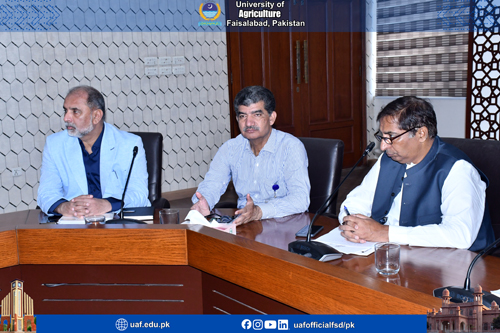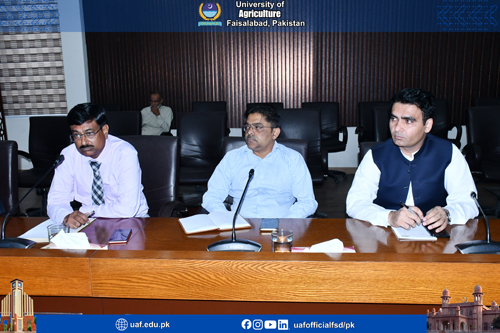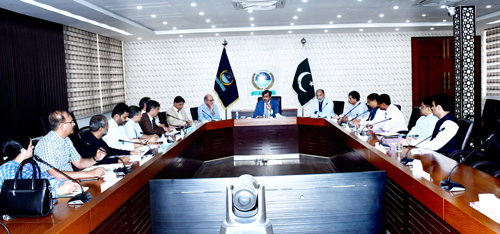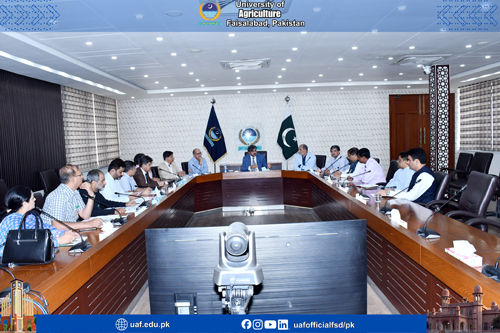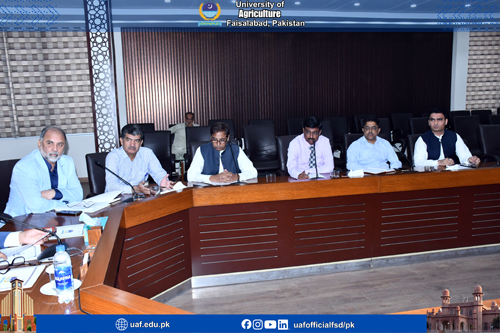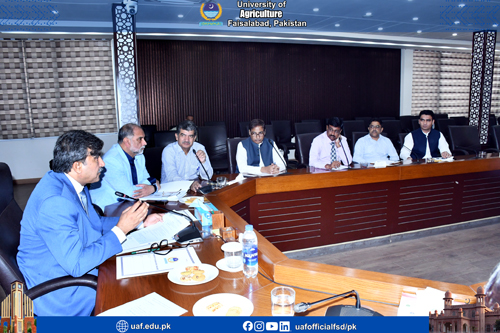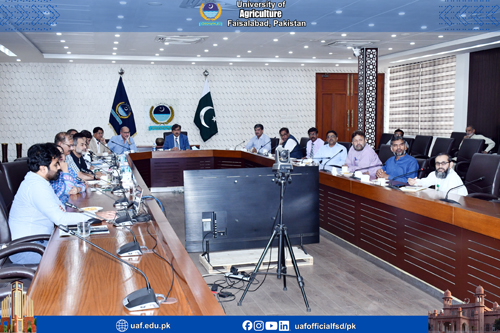

The Regional Agriculture Forum, Central Punjab.
FAISALABAD, Aug 31: The Regional Agriculture Forum, Central Punjab, has called for stronger coordination among academia, research institutions, agricultural extension services, farming communities and industry to address emerging challenges facing the agriculture sector and ensure long-term food security. The meeting, chaired by University of Agriculture Faisalabad (UAF) Vice Chancellor Dr Zulfiqar Ali, was attended by Dean Agriculture Dr Ghulam Murtaza, Director Agriculture Extension UAF Dr Babar Shahbaz, Progressive Grower Syed Feisal Hassan Shah, Registrar Dr Asif Kamran, Director Agriculture Extension Govt of Punjab Khalid Mehmood, Chairman Department of Irrigation Dr Adnan Shahid, Director Graduate Studies Dr Muhammad Khalid Bashir, Director Horticulture UAF Dr Ahmad Sattar, Director CAS Dr Bushra Sadia, Dr Rao Sabir and other stakeholders. Prof Dr Zulfiqar Ali said climate change, depletion of natural resources and the growing demand for food required coordinated, science-based and practical solutions. He stressed the need to strengthen linkages among universities, research organisations, government departments, extension services, farmers and the private sector to accelerate the transfer of modern technologies from laboratories to farmers’ fields. He said stronger research-extension-farmer linkages, coupled with the promotion of climate-smart agriculture, could help improve productivity, strengthen farmers’ livelihoods and ensure sustainable food security. The meeting reviewed progress on several key initiatives, including research proposals under the Punjab Agricultural Research Board (PARB), the Adjunct Faculty initiative at UAF, engagement of experts from government and industry in postgraduate students’ supervisory committees, and the restructuring of Technical Working Groups into Centres. The meeting also urged the scientists to apply for adjunct faculty, UAF as a step towards strong collaboration among the different institutions. They also held a detailed discussion on flood mapping and its implications for agriculture, particularly for resilient agricultural planning. The participants agreed that the Regional Agriculture Forum would continue to serve as a collaborative platform bringing together academia, researchers, extension services, industry and farmers for knowledge sharing, demonstration-based learning, innovation and coordinated action. They emphasised that sustained collaboration among all stakeholders was essential for developing a more productive, climate-resilient and sustainable agricultural sector.