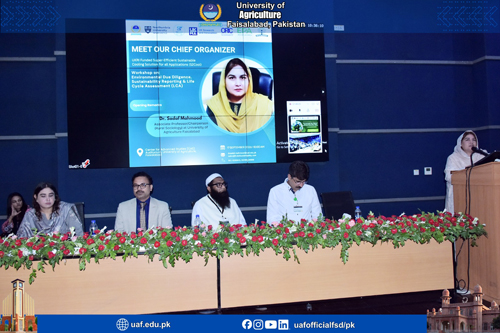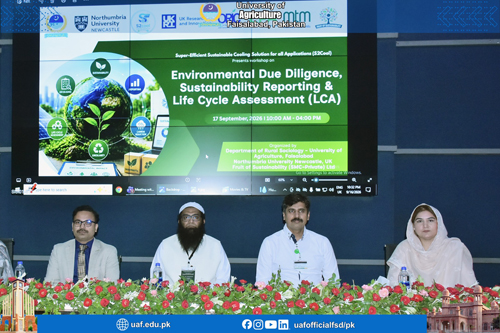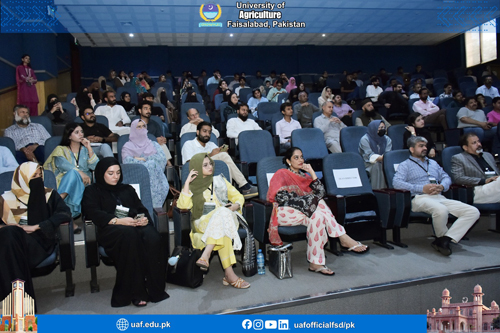

The workshop on “Environmental Due Diligence,
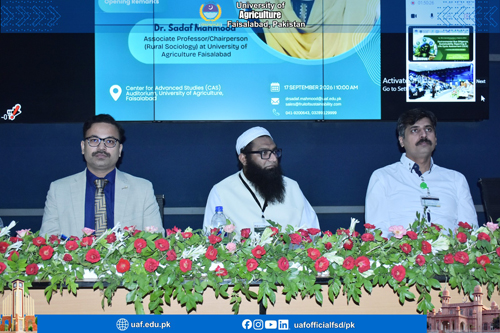
FAISALABAD, Sept 18: Climate change, water scarcity, soil degradation and rising energy demand are exposing the environmental costs of conventional production systems, underscoring the need for environmental due diligence, sustainability reporting and life cycle assessment to identify risks, reduce carbon emissions, and make agriculture and allied industries more sustainable, experts said at a workshop at the University of Agriculture Faisalabad (UAF). The workshop on “Environmental Due Diligence, Sustainability Reporting and Life Cycle Assessment (LCA)” was organised by the Department of Rural Sociology, University of Agriculture Faisalabad, in collaboration with Northumbria University, Newcastle, UK, and Fruit of Sustainability (SMC-Private) Limited under the UKRI-funded Super-Efficient Sustainable Cooling Solution for All Applications (S2Cool) project. Dr Muhammad Wakil Shahzad from Northumbria University UK, Industrialist Nasir Zia, Chairperson Department of Rural Sociology Dr Sadaf Mahmood, Dr Asif Kamran, , Sarim Mehmood, Miqdam Junaid from Fruit of Sustainability, Dr Muhammad Sultan, Dr Nabeel Amin, Attia Iniyat, Noshaba Aslam and other professionals spoke on the occasion. Dr Muhammad Wakil Shahzad of Northumbria University, UK, who leads the S2Cool project, highlighted the importance of international research collaboration in developing innovative responses to extreme heat and energy challenges. Such technologies, he added, could have wider implications for agriculture, food preservation and supply-chain efficiency in a changing climate. Dr Sadaf Mahmood, Chairperson of the Department of Rural Sociology, stressed upon the need for practical knowledge of environmental assessment, sustainability reporting and climate-conscious decision-making so that scientific research must be translated into solutions for farmers, industries and communities. Dr Asif Kamran said environmental assessment should not be confined to industries because agricultural production was closely linked with soil, water, energy, biodiversity and greenhouse gas emissions. They stressed that better environmental information could help identify resource-efficient farming practices and technologies while supporting long-term food and environmental security. Nasir Zia said reliable environmental data was essential for identifying risks and measuring progress towards reducing environmental footprint. He highlighted the importance of environmental due diligence in making production and investment decisions more environmentally responsible. Sarim Mehmood, CEO and Founder of Fruit of Sustainability, said environmental sustainability should be integrated into business decisions, product development and supply chains instead of being treated as a separate activity. The speakers highlighted Life Cycle Assessment as an important tool for examining the environmental impacts of products, technologies and processes throughout their life cycle. In agriculture, they said, LCA could help identify environmental hotspots associated with inputs such as fertilisers, pesticides, irrigation, machinery, energy, processing, transportation and waste management, enabling researchers and industry to identify areas where environmental impacts could be reduced.