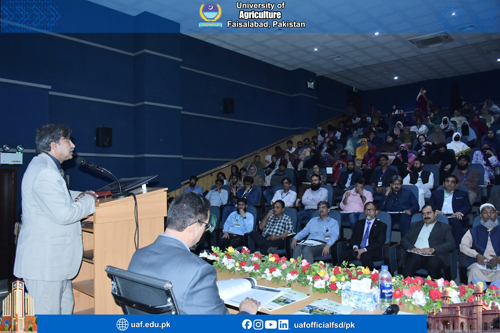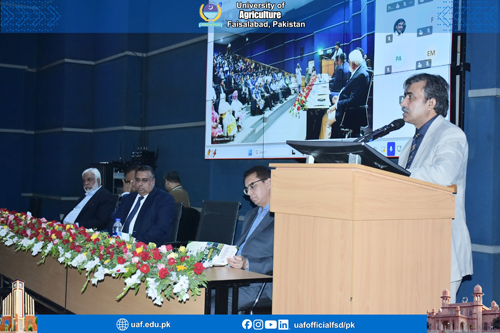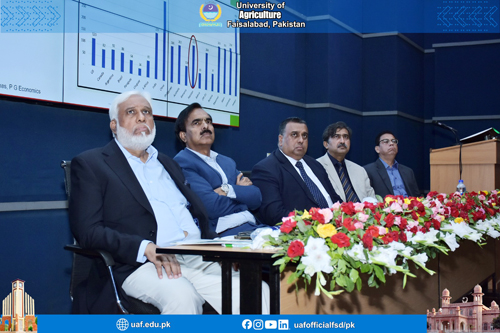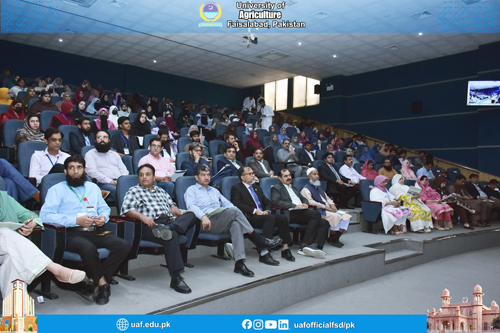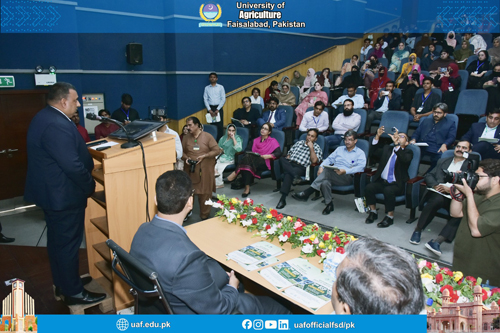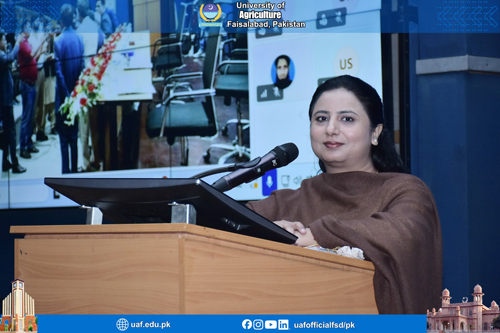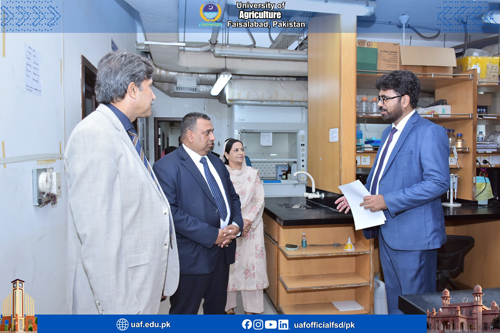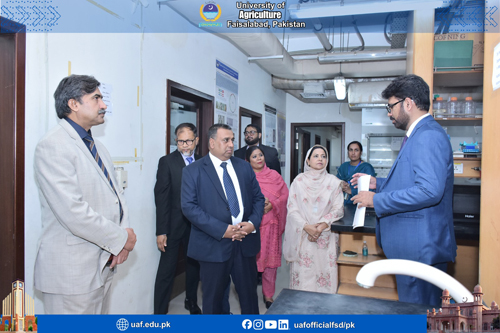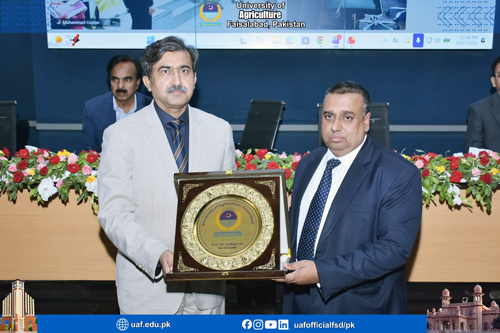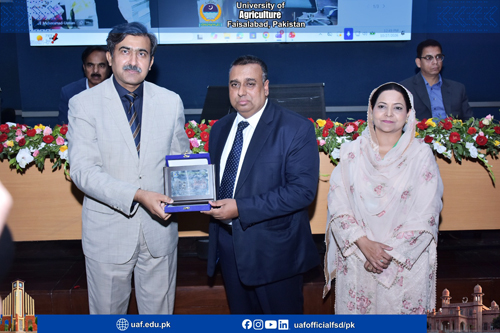

Two-day Biotechnology Society of Pakistan congress under the theme “Biotechnology for Global Health and Food Security,” organised by the Centre of Agricultural Biochemistry and Biotechnology (CABB)
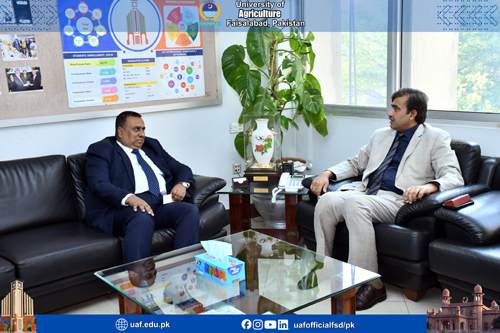
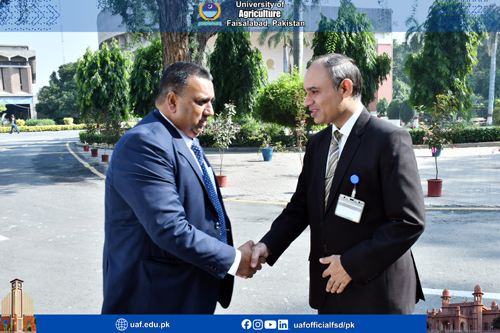
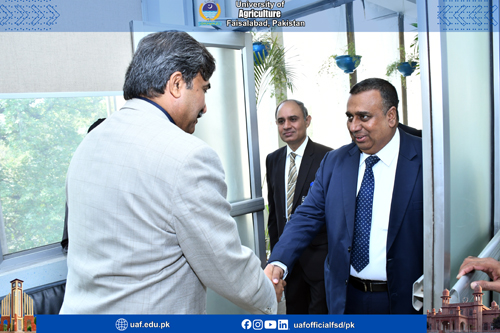
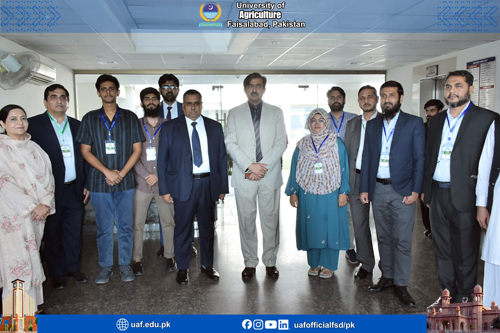
FAISALABAD Oct 27: Highlighting deep historical and cultural ties between Pakistan and Bangladesh, High Commissioner of Bangladesh H.E Muhammad Iqbal Hussain Khan has called for enhanced bilateral collaboration in agricultural research, food security, and higher education. He visited the University of Agriculture and addressed inaugural session of two-day Biotechnology Society of Pakistan congress under the theme “Biotechnology for Global Health and Food Security,” organised by the Centre of Agricultural Biochemistry and Biotechnology (CABB) and the Centre for Advanced Studies, and D-8 Center , University of Agriculture Faisalabad in collaboration with the Biotechnology Society of Pakistan. He said that "Bangladesh is largely self-sufficient in rice and fish production, yet we heavily import grains such as maize to support our poultry and dairy industries," the High Commissioner stated. He noted that Pakistan possesses immense potential as an exporter of high-quality maize and rice, presenting a vital opportunity to bridge trade gaps between the two countries. Drawing parallels between the two nations' agrarian landscapes, he noted that both countries share fertile lands and a mutual reliance on robust farming sectors. He lauded the ongoing academic exchanges facilitated under Allama Iqbal Scholarships Scheme, which enables Bangladeshi students to pursue higher education at various Pakistani universities. He lauded the efforts of the UAF for agrucltrual uplift and trained manpower. He reaffirmed commitment to strengthening bilateral ties under multilateral frameworks such D-8, SAARC and the OIC, emphasizing that increased cooperation will yield mutual prosperity for the people of both countries. Highlighting biotechnology’s growing influence on everyday life and food production, he said farmers increasingly adopted technologies and practices that improved productivity and profitability. He stressed that scientists must identify appropriate technologies for specific environmental conditions and ensure their safe and responsible application. “Preserving the environment is of paramount importance. Stressing upon the modern technology including biotechnology, ensuring its proper application for the benefit of nations and humanity is extremely important ,” he said, urging countries to develop expertise in biotechnology while safeguarding human health and the environment. Prof Dr Zulfiqar Ali, Vice Chancellor of the University of Agriculture Faisalabad (UAF), said D-8 member countries should strengthen cooperation in agricultural research, capacity building and biotechnology to improve food security and ensure the availability of affordable food. He said Bangladesh, a founding member of the organisation, and other member states could benefit from sharing experiences and lessons learned over decades of research on genetically modified (GM) and biotechnology crops. He said Pakistan needed to strengthen its preparedness to benefit from these technologies and improve its policy framework in light of international experiences. “All stakeholders must work together to address the challenges associated with biotechnology and promote the effective adoption of these technologies so that the country can benefit from scientific advancements and move towards more affordable and secure food supplies,” he added. MNS Vice Chancellor Prof Dr Asif Ali said that the National Agricultural Biotechnology Policy 2025 marks and significant step towards placing Pakistan’s agriculture on a modern, science-based and innovation-driven path. He said that NABP provides a robust framework to enhance agricultural productivity, encourage innovation, attract investment, and ensure the responsible and efficient use of biotechnology. Shahid Mehmood, Dr Abdul Raheed, Prof Hon Ming Lam from China, Prof Ratna Kumaira, NIGAB Director Dr Shaukat Ali, Dr Zunaira Afzal and other notables also address the inaugural session.