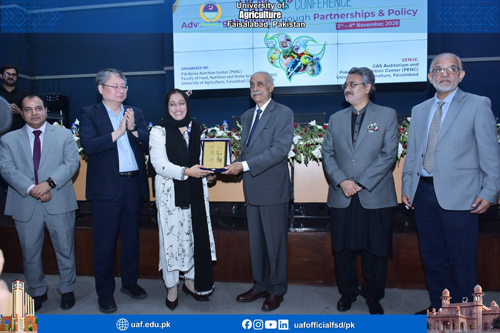

Punjab Higher Education Commission Chairperson Prof Dr Iqrar Ahmad Khan has called for a strengthened role of academia, research institutions and development partners in addressing widespread malnutrition, which affects more than 40 per cent of children and women in Pakistan, amid persistent poverty and food insecurity.
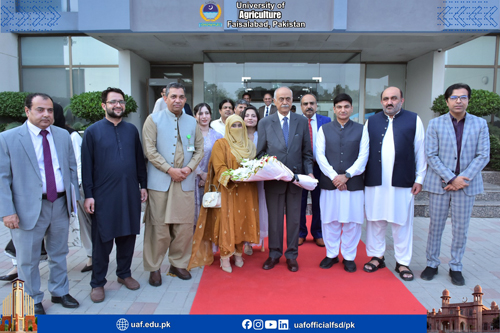
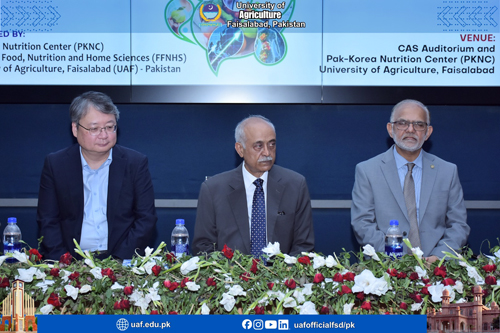
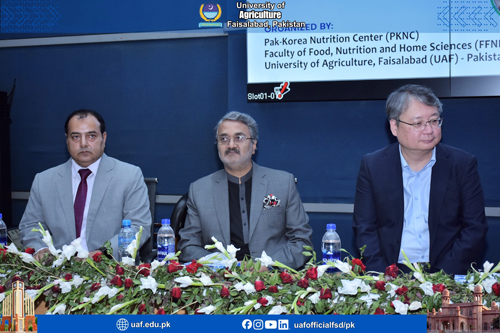
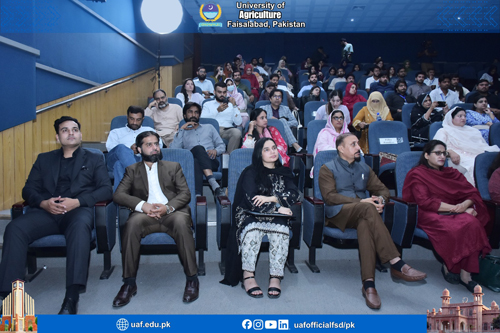
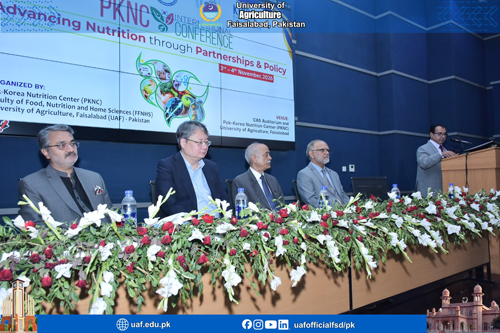
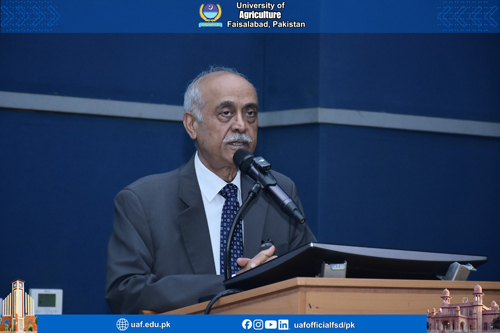
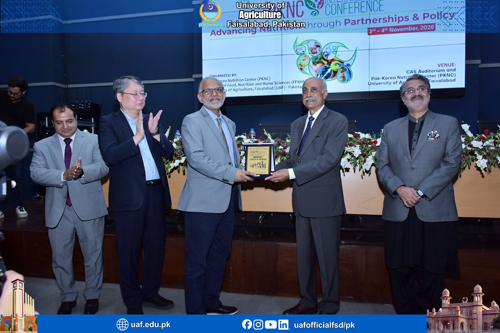
FAISALABAD, Oct 4: Punjab Higher Education Commission Chairperson Prof Dr Iqrar Ahmad Khan has called for a strengthened role of academia, research institutions and development partners in addressing widespread malnutrition, which affects more than 40 per cent of children and women in Pakistan, amid persistent poverty and food insecurity. He was addressing the concluding session of a two-day international conference organised by the Pak-Korea Nutrition Center (PKNC), University of Agriculture Faisalabad (UAF), under the theme “Advancing Nutrition through Partnerships & Policy” at the Centre for Advanced Studies. Prof Iqrar Ahmad Khan said the PKNC had a rich history of achievements, adding that under the PKNC development journey, initially discussion was focused on the supply side, agricultural production and One Health approach. However, it soon became evident that concentrating solely on production was insufficient in a country where more than 40 per cent of the population faced malnutrition. This realisation led to of its vision to incorporate a dedicated nutrition component. He said the PKNC had laid a strong foundation for capacity building, reducing food waste and developing practical solutions to address pressing societal challenges in Pakistan. Dean of the Faculty of Food, Nutrition and Home Sciences, UAF, Prof Dr Imran Pasha emphasised the need for a coordinated national strategy involving federal and provincial departments, universities, research institutions and international development partners to tackle emerging nutrition challenges. He also proposed establishing a Centre of Excellence in Nutrition at UAF to strengthen research, policy development and institutional collaboration. He called for improved food-environment monitoring to generate evidence for developing healthy food policies, particularly in settings that shape children's food choices. He stressed that child and community nutrition should be integrated with the prevention of non-communicable diseases through a comprehensive life-course approach. Dr Imran Pasha expressed hope that the conference recommendations would provide a practical foundation for the next phase of the PKNC and further strengthen cooperation between Pakistan and South Korea. Dr Arif Rehman, Chief of the Food and Agriculture Section at the Planning Commission of Pakistan; Ms Sodam Baek, Deputy Country Director of KOICA; Dr Jaehan Kim, Project Manager Consultant; Dr Benish Israr and others attended the event.