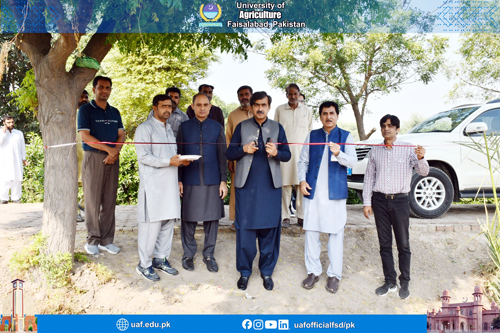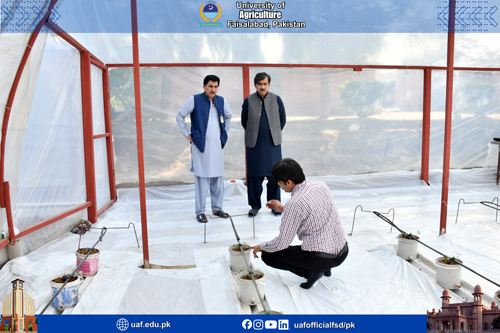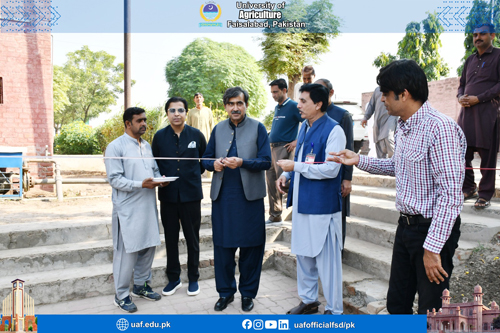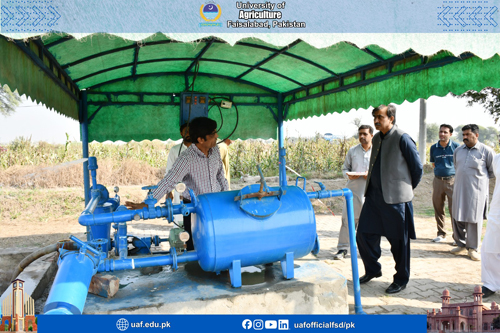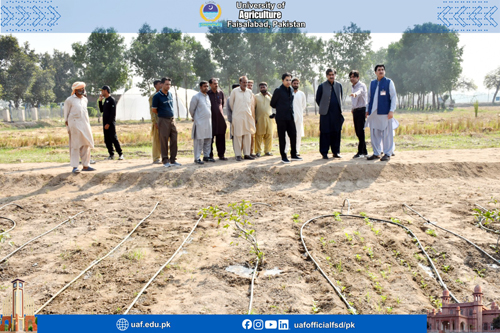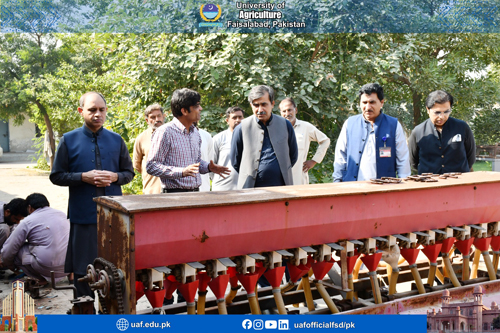

University of Agriculture Faisalabad Vice Chancellor Prof Dr Zulfiqar Ali visits Water Management Research Center.
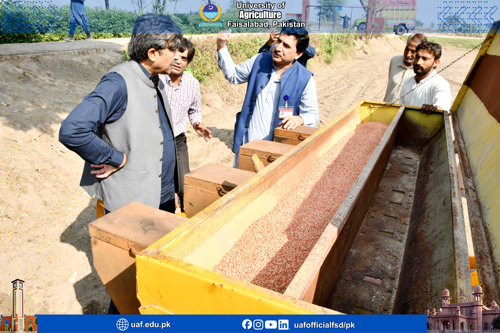
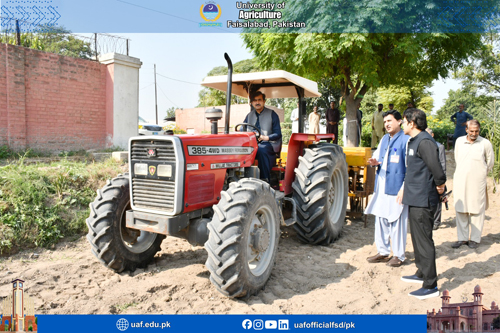
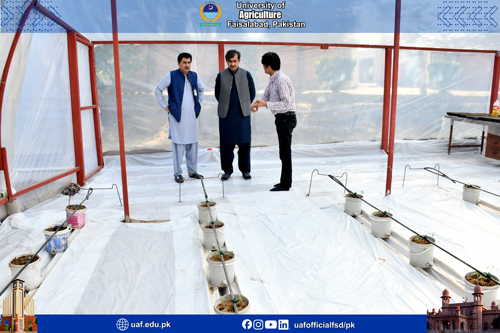
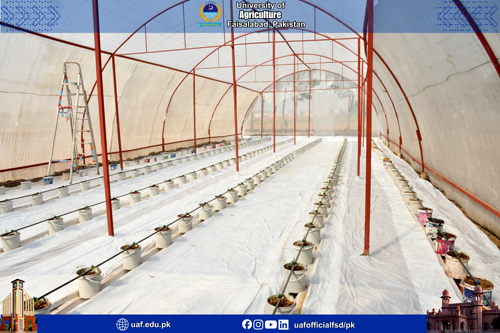
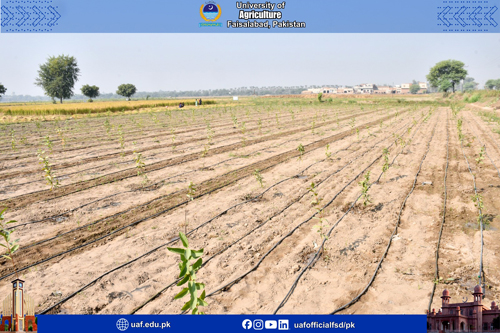
FAISALABAD Nov 6: University of Agriculture Faisalabad Vice Chancellor Prof Dr Zulfiqar Ali has said that Pakistan is ranked among water scarce countries with only 900 cubic meter per capita water availability below the international scarcity threshold of 1,000 cubic meters, calling for adopting innovative water agricultural management technologies like drip irrigation and bed planting. He was talking to officials during his visit Water Management Research Center where he was briefed about the projects including bed planting, hydroponic, bio-fertilizer and clean water. He was flanked with Principal Officer Estate Management Dr Nadeem Akbar, Dr Ahmad Waqas, Dr Muhammad Tayyib and others. He said that that per capita water availability is steadily declining as the population increases. He noted that universities must spearhead technological solutions to maximize the output of this vital resource. He emphasized combining water-use efficiency with advanced farming methods. To demonstrate these concepts, the center aims to develop practical models ranging from small landholdings of 1 to 2 acre up to 1,000 acres, serving as a "living lab" for local growers. Furthermore, plans are underway to host a major Farmer Field Day during the Rabi season to showcase these scalable technologies directly to the agricultural community. As part of the initiative to build a skilled local workforce, the research center is collaborating with community college to engage students and faculty. This ensures that whether farmers require professional support or students wish to work independently, they are well-trained in modern practices such as drip irrigation, bio-fertilizer production, and indigenous hydroponic rooting media. Highlighting local resourcefulness, Dr. Ali also praised researchers for utilizing recycled materials—such as coconut coir collected from roadside vendors—to develop cost-effective growing solutions rather than relying on expensive imports. Concluding his visit, the Vice Chancellor commended the center's team and research team for their dedicated efforts, urging them to share these valuable resource materials widely with the farming community.